CCPA Compliance Software to Secure Your Business
Implement all your CCPA compliance requirements under one roof. Display opt-out notice, 'Do not sell' link and generate privacy disclosures.
The #1 cookie consent solution, trusted by 1.5 Million+ websites



What is CCPA?
The California Consumer Privacy Act (CCPA) is data privacy legislation that applies to businesses that process the personal data of California residents. Effective January 1, 2020, CCPA provides individuals control over the personal data that businesses collect about them.
From January 01, 2023, the California Privacy Rights Act (CPRA) amends the existing CCPA.
Who does CCPA apply to?
The CCPA applies to for-profit businesses that collect, share, or sell the personal information of California residents and fit any of the criteria.
$25M
Has annual gross revenues over $25 million
50K
Processes personal information of 50,000 or more consumers, households, or devices
50%
Earns more than 50% of annual revenue from the sale of personal information
CCPA Compliance Checklist for Websites
Comply with CCPA using CookieYes compliance software
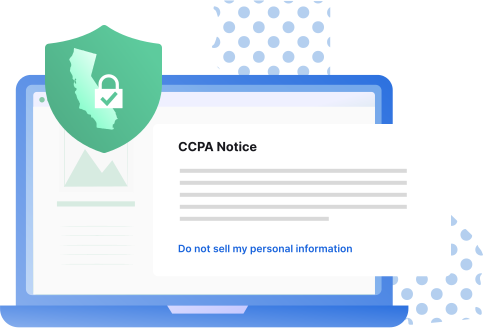
Implement ‘Do not sell’ opt-out notice
The CCPA requires businesses to respect the consumer’s right to opt-out of the sale of their personal information to third parties. This includes data collected through cookies. With CookieYes you can
- Scan your website for cookies and trackers
- Pre-select cookie categories to block cookies when the user opts out
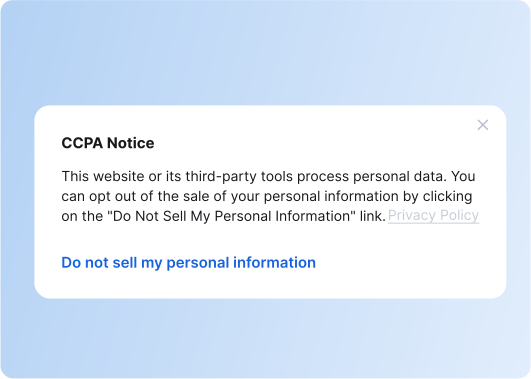
- Display a CCPA opt-out notice or simply add a ‘Do Not Sell My Personal Information’ link on the website footer
Comply with GDPR and CCPA regulations
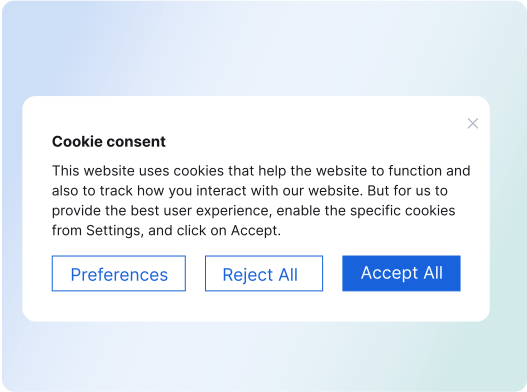
If your website has visitors from both US and the EU, then it is important to comply with both laws. Businesses are required to display an opt-out notice for CCPA and a cookie consent banner for GDPR. With CookieYes, you can
- Show CCPA and GDPR cookie notices for website visitors
- Geotarget the CCPA opt-out notice for California/US visitors
- Geotarget the GDPR cookie banner for visitors from the EU & UK
Add a privacy policy
Under CCPA, businesses should include an up-to-date privacy policy on their website. It should describe what personal information is collected, the data processors, the purpose of collection and description of consumer rights. With our privacy policy generator, you can
- Answer a simple data privacy questionnaire
- Generate your privacy policy instantly
- Copy-paste the privacy policy to your website
Create a cookie policy
Under the CCPA, businesses must include a disclosure about their use of cookies in their policies. It can either be included within the privacy policy or added as a separate disclosure. With our cookie policy generator, you can
- Edit or customize the preset cookie policy template
- Generate a cookie policy with a complete cookie list
- Auto-update your policy with each website scan
What are consumer rights under CCPA?

Right to notice
The right to know about the personal information a business collects about them and how it is used and shared.

Right to deletion
The right to delete personal information that a business has collected from them.

Right to opt-out
The right to opt-out of the sale of their personal information by a business.

Right to non-discrimination
The right to not be discriminated against for exercising their consumer rights under CCPA.
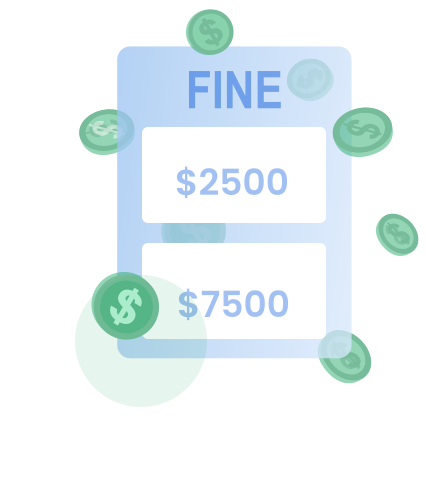
What are the penalties for non-compliance with the CCPA?
Businesses can get civil penalties of up to $7500 for each intentional violation while each unintentional can amount to a fine of up to $2500. Businesses will have a 30-day cure period to rectify violations before the California Attorney General takes action.
CCPA provides a private right of action to consumers under limited circumstances if they suffer a data breach due to negligence from a business. Consumers can sue for the amount equal to the monetary damages they actually suffered from the breach or "statutory damages" of up to $750 per incident.
To avoid these penalties, follow this guide on how to comply with CCPA.
FAQ on CCPA Compliance
The California Consumer Privacy Act (CCPA) is a state-wide privacy regulation enacted in 2018. CCPA compliance applies to any for-profit entity doing business in California that collects, shares, or sells the personal information of California residents.
To be CCPA compliant, companies are required to meet certain standards for data collection and processing of any personal data that can be linked, associated, or related to Californians.
Help guide: How to use CookieYes for CCPA Compliance
Fast-track your CCPA compliance in minutes
Set up a cookie consent banner in 3 simple steps and automate your compliance.